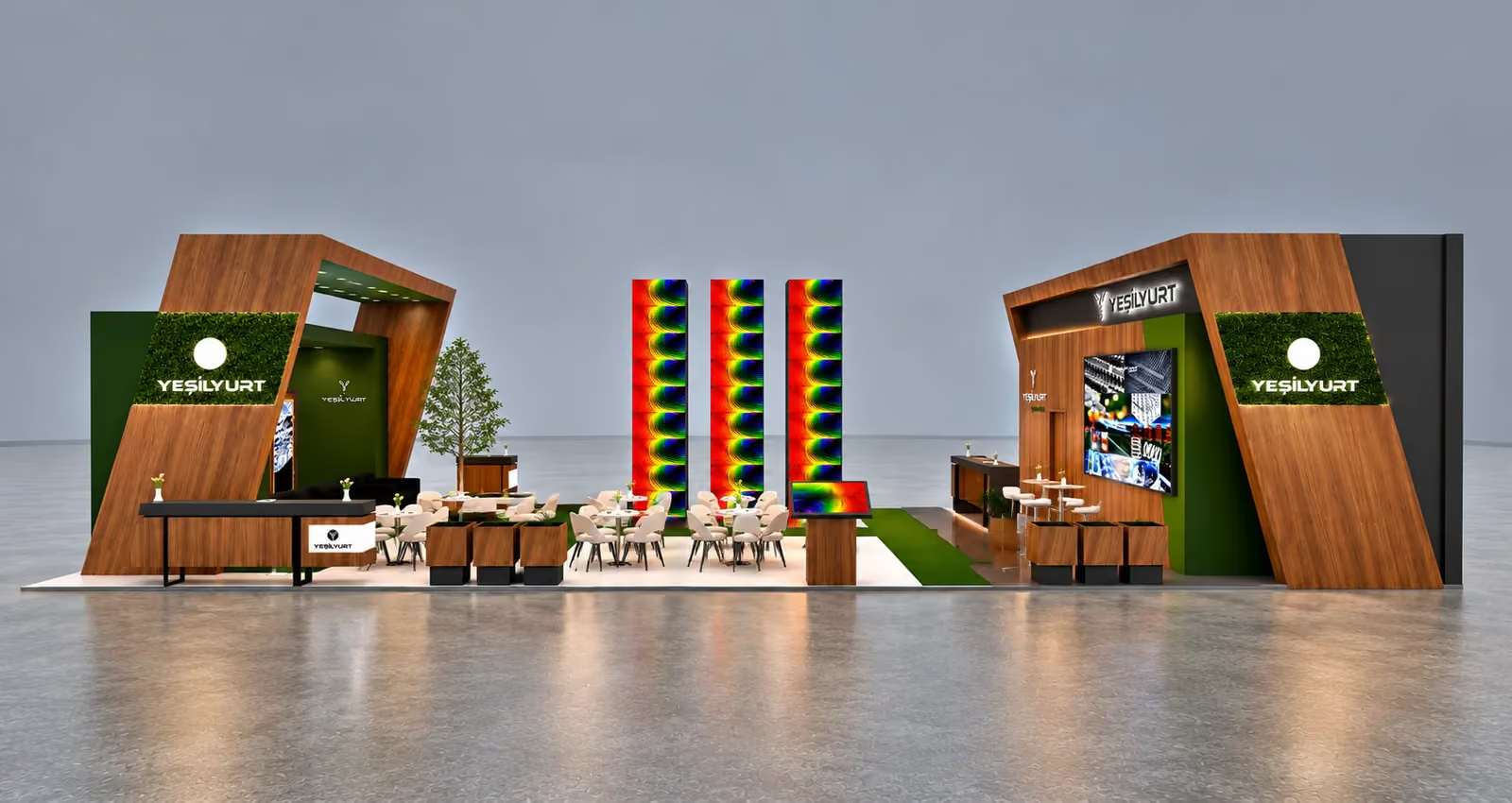
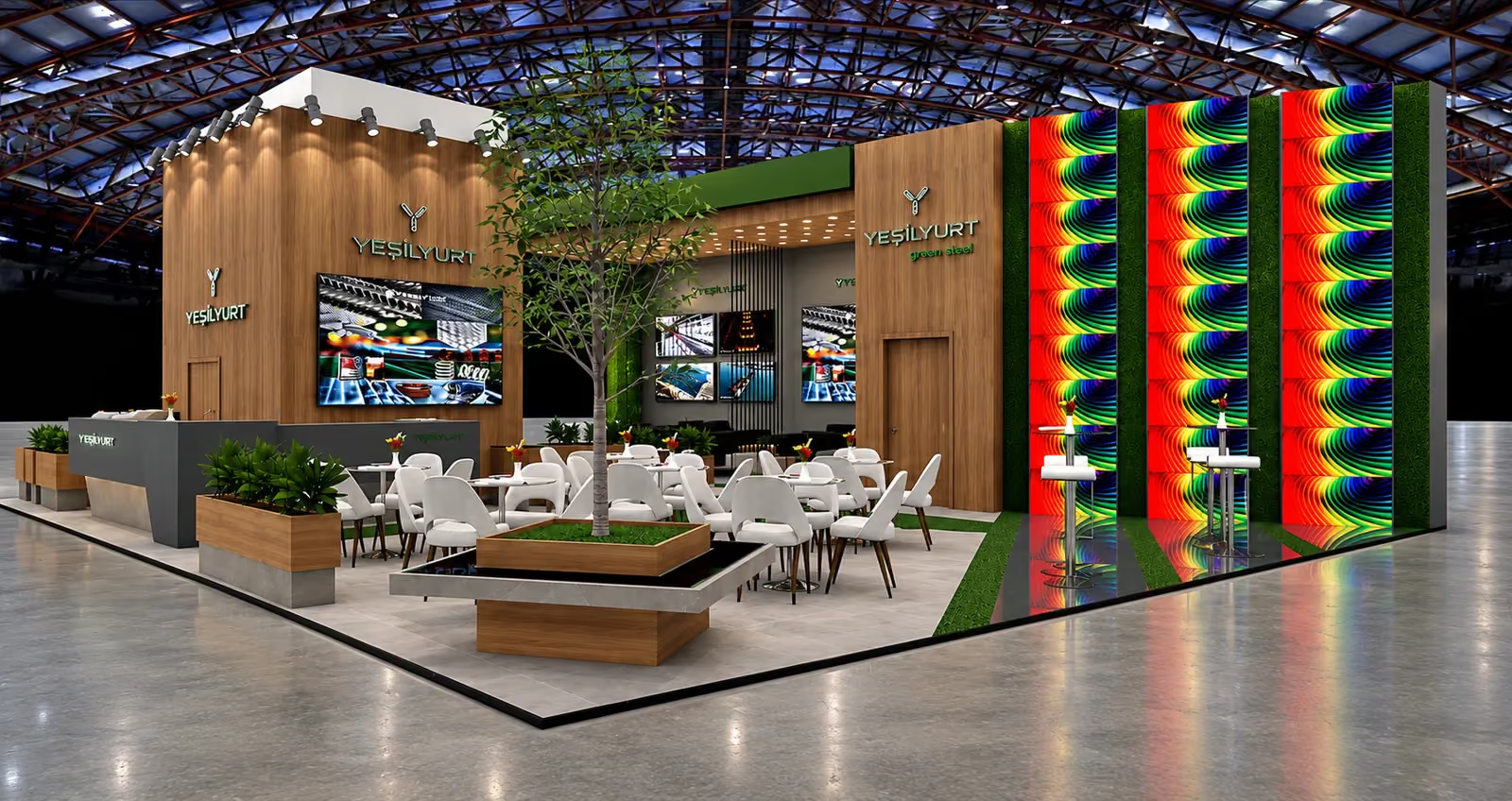
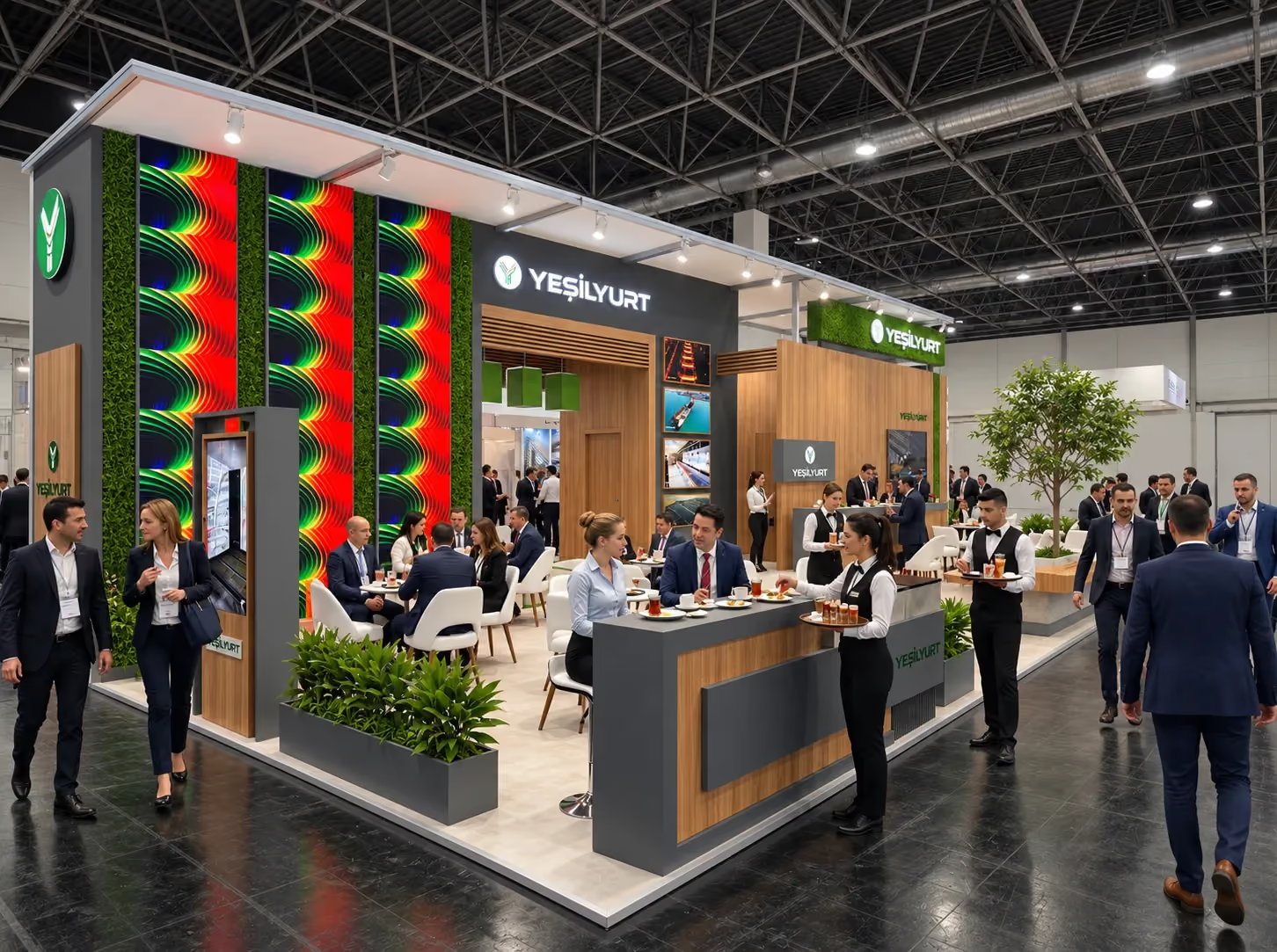
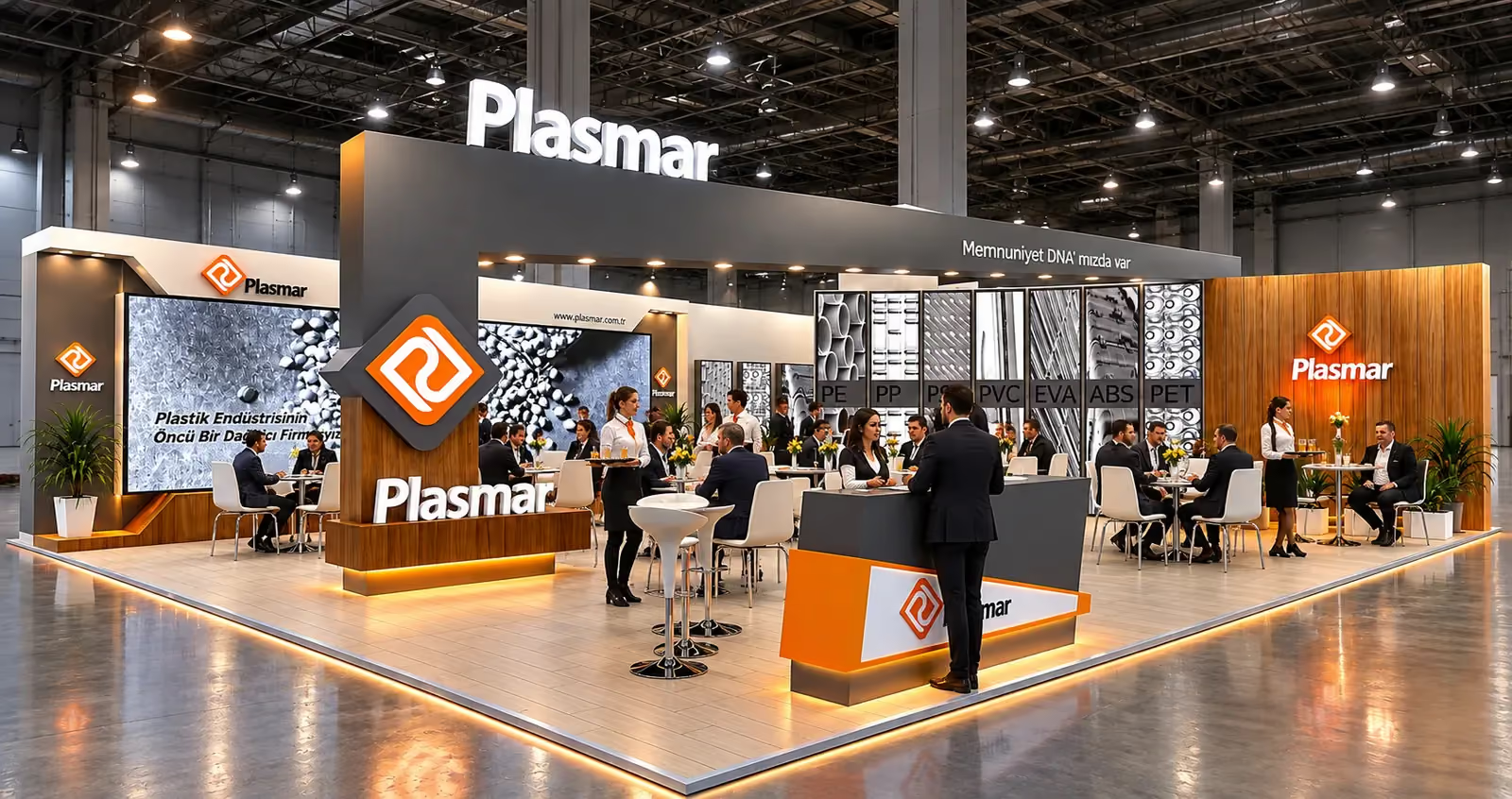
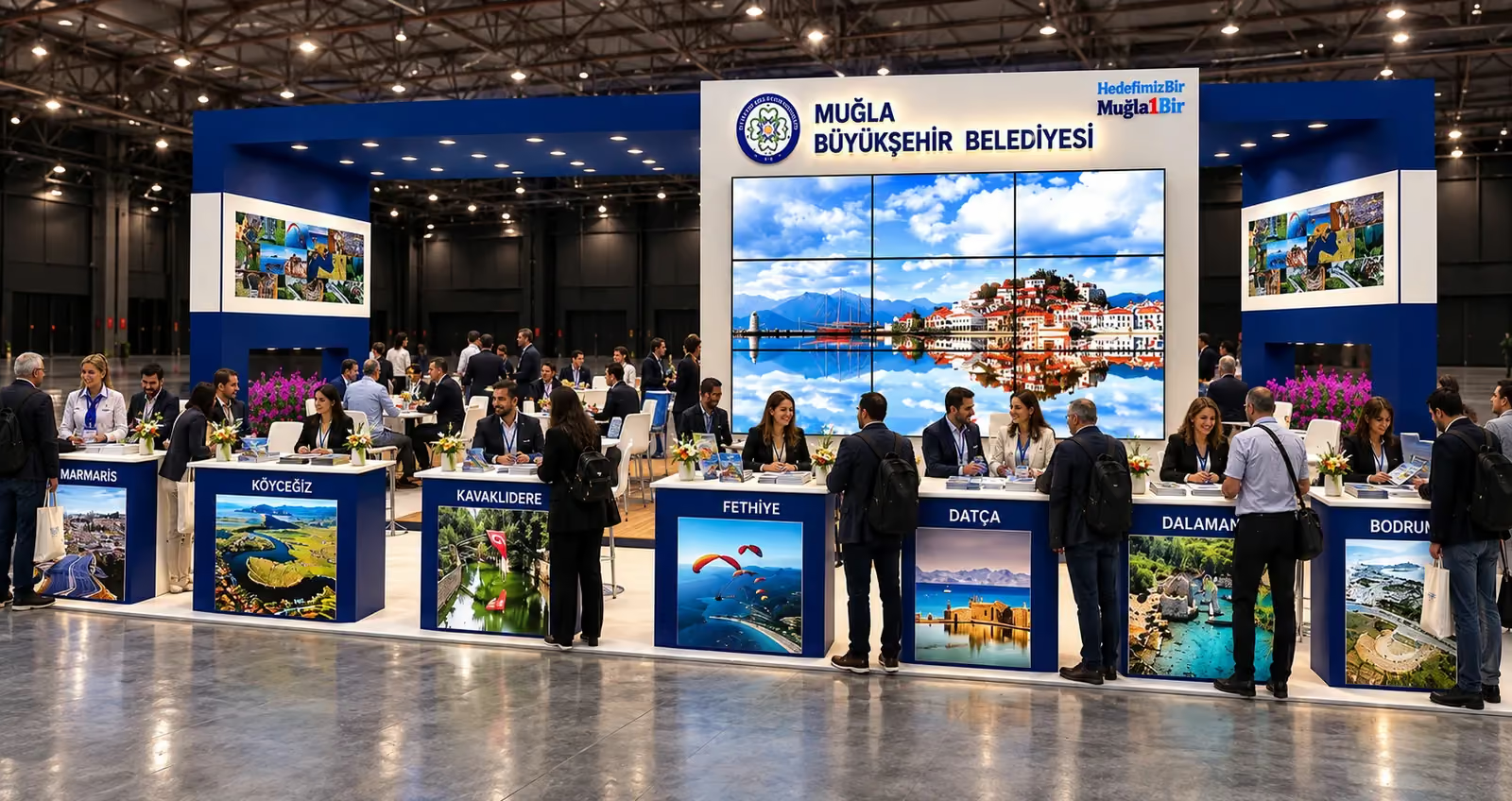
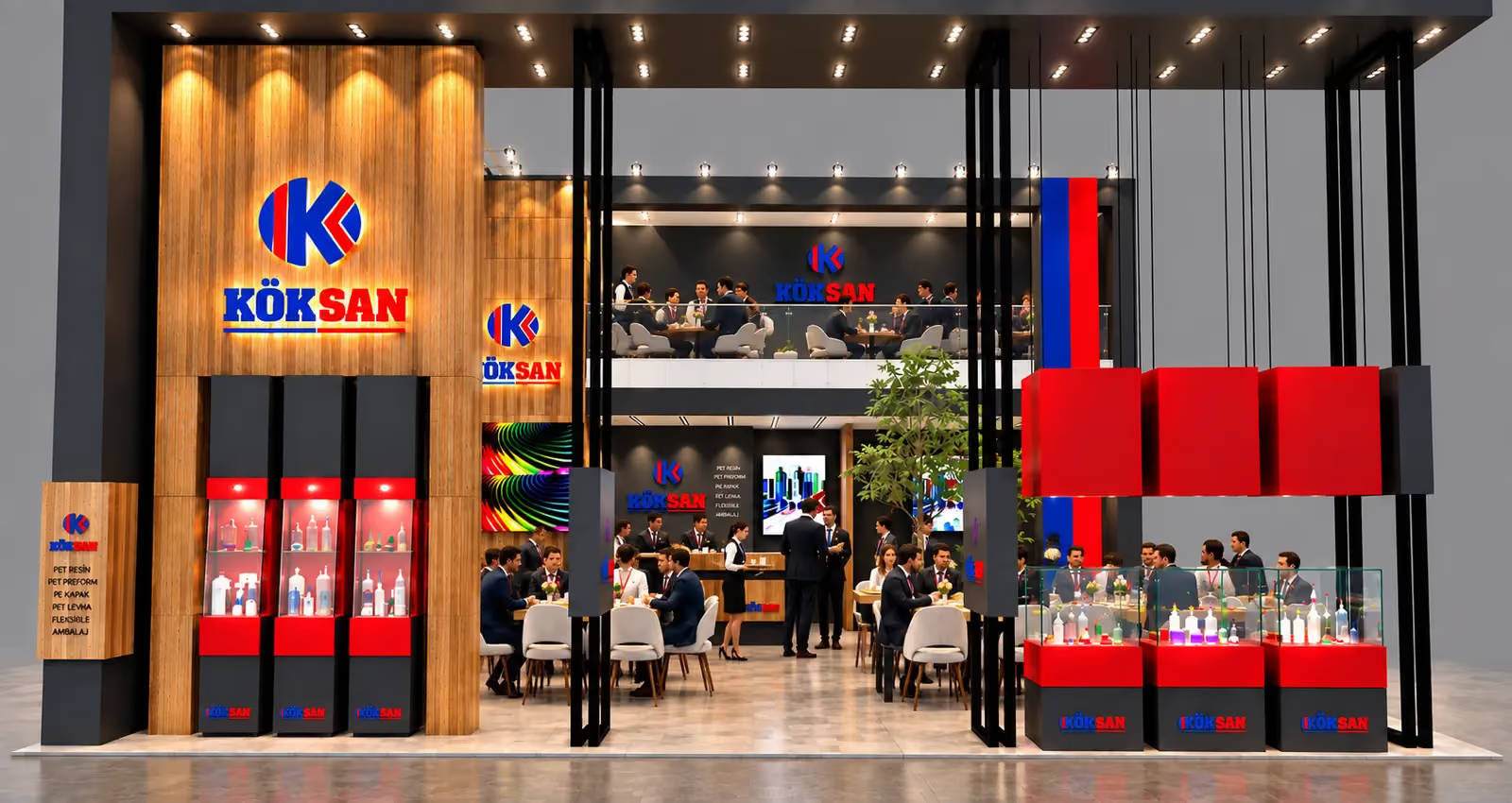
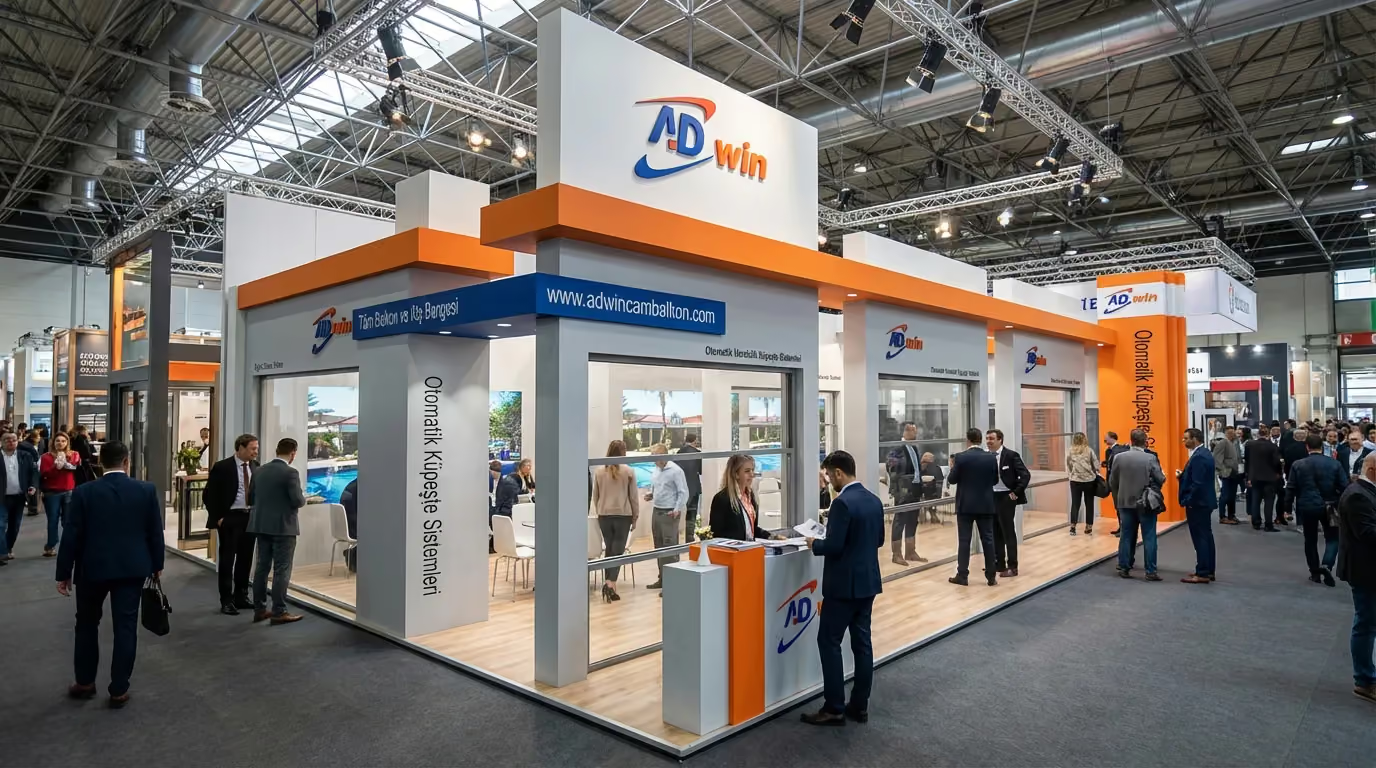
Inside Exhibition is an Istanbul-based company focused on the design, technical documentation and build of custom-designed exhibition stands. It works in eight countries, including Turkey.
Why design and execution are considered together
Inside plans and manages the process belonging to its own project end to end. The project moves within the same process from the first line of the concept to the final detail on the exhibition floor.
The feasibility of the design, material and production details, logistics and installation are considered together at the design table, from the earliest stage.
Each project is considered in line with the brand's corporate identity and its goals for taking part in the fair, with a design approach of its own.
Exhibition stand projects are handled as one continuous process, from design to build, within a set timeline.
With separate teams
Design office×
Workshop×
Installation crew
With Inside Exhibition
01Design
02Technical documentation
03Physical planning
04Implementation
05On site
With separate teams
Design office×Workshop×Installation crew
With Inside Exhibition
01Design
02Technical documentation
03Physical planning
04Implementation
05On site
Where we work
Turkey, Germany, the United Kingdom, France, Italy, Azerbaijan, Qatar and the United Arab Emirates.
Venue regulations, official contractor rules and customs procedures differ in each of these countries. These differences are taken into account from the start of design and execution.
03Panel and structure production and subcontract follow-up
04Graphic production and application
05Shipping and customs follow-up
06On-site installation and dismantling
Exhibition stand projects have their own rules, schedule and risk items. For this reason Inside Exhibition focuses its work on the design, technical documentation and build of custom-designed exhibition stands.
How we work
01 / 04
During the fair
The Site Team Is on the Grounds Throughout the Fair.
01
After the stand is handed over, the Inside team is on the grounds or close by, and requests that reach it through the communication channel are handled by this team. The work on site during the fair and the dismantling that follows are considered part of the project scope.
Design & Execution
Design Decisions Are Considered with Execution Conditions.
02
Production, shipping and installation conditions are assessed at the design stage; the decisions in a drawing are considered together with how they will be carried out on site.
Delivery
Planning Follows the Opening Schedule.
03
Because the opening time of the fair is fixed, design, production and installation are planned around the time by which the stand must be ready and handed over.
Process
The Process Is Managed End to End.
04
Inside runs the process belonging to its own project from design to installation. Sales and after-sales procedures, approval drawings, technical applications and uploads made on the participant’s behalf on the organiser’s platform, purchasing, coordination between its own production facility and sub-production, shipping and installation are handled within this framework.
Our approach
We think throughevery detail first
01Brand
02Representation
03Ease
04Trust
01 / 04
Our approach
We think through every detail first
01Brand
02Representation
03Ease
04Trust
Questions14
These questions are here not because they’re asked often, but because not asking them is expensive. The core of each answer is in the first two or three sentences; detail follows.
Sheet 03 — FAQInside Exhibition
CategoryAll
Shown14 / 14
Summary
The plan is drawn up separately for each project, considering production price, the number and volume of the parts to be transported, delivery and installation time, the rules of the venue and organiser, customs procedures and whether the stand will be reused at later fairs. Production is handled through the in-house workshop and the coordination of sub-production; shipping and the necessary customs formalities are followed as part of the project’s logistics planning.
Detail
Venue rules are the concrete part of this plan and are taken into account from the start: at Hannover, cranes and forklifts are used only through forwarders approved by Deutsche Messe; at Cologne, only Koelnmesse’s contract partners use cranes and similar equipment. At Cologne, Koelnmesse also recommends that customs formalities are handled by the contract carrier, and goods from abroad need three copies of a proforma invoice in German; these steps are written into the shipping plan from the outset and followed up.
Summary
The organiser’s technical office intervenes in projects that fall outside the set criteria, informs the participant and asks for corrections. The main reasons are: falling outside the boundaries of the allocated area, exceeding the planned height, not meeting the technical dimensions or distances for the area and layout, blocking emergency exits and access hatches and doors, and not using, or not specifying, materials that meet occupational safety requirements. These criteria vary from venue to venue.
Detail
The approval threshold differs from fair to fair. At Messe Frankfurt, according to its portal, the structures that need approval include stands over 100 m², two-storey stands, special structures and structures higher than 4 metres; at Koelnmesse, single-storey stands that follow the Technical Guidelines need no approval, while special structures and two-storey structures do. Fire-class certificates for materials are requested according to the rules of the organiser and the country.
Summary
A double deck widens the space vertically where floor area is tight. At fairs and for companies with heavy hosting, dealer and visitor traffic, it allows the meeting and hospitality area to be set on a separate level from the display area; companies with large floor areas may need one too. In planning, the build of the second level, the structural calculation, the organiser’s approval and the installation schedule are considered together.
Detail
The approval framework differs by venue: at Messe Frankfurt and Koelnmesse two-storey structures need approval, and at Hannover multi-storey structures do. Approval drawings and technical applications are generally uploaded to the organiser’s platform by Inside on the participant’s behalf. The hall’s ceiling height and the organiser’s height limit are checked at the start of the design; the clear height a double deck needs is assessed together with that information.
Summary
The decision depends on how many fairs the stand will be used at. If the stand will be used at several fairs, its parts are designed for reuse from the start and the investment is spread across those uses; a stand designed for one fair has its parts produced again for later fairs. For a reused stand, storage and maintenance are added as permanent costs.
Detail
A custom-decor stand that was not designed for reuse has its parts produced again for each fair, so the total of planned uses is taken into account from the start.
Item
Designed for reuse
Designed for one fair
Second use
Graphics, labour and adaptation
A rebuild
Parts and sizes
Set at the outset for reuse
Set to the fair’s space
Storage
Ongoing cost
Not needed if the stand is not reused
Summary
Services such as electricity, water, rigging and forklift/crane work are ordered through the organiser’s portal or service shop; at Hannover, for example, cranes and forklifts are used only through forwarders approved by Deutsche Messe. Stand design, production, furniture and graphics belong to the exhibitor or the stand builder. Which items are mandatory is set out in the exhibitor manual or the service portal and varies by fair; these items have order deadlines.
Detail
This split affects the budget: mandatory items cannot be freely chosen. The mandatory items and their deadlines are taken from the exhibitor manual.
Summary
Six weeks before the fair, the organiser asks the exhibitor for the stand project image, the marked overall external dimensions, the layout image and the electricity request; the organiser sets the final upload date and announces it to the exhibitor. Inside makes the upload on the exhibitor’s behalf. The lock date is found with two calculations: the organiser’s deadline for submitting plans, and the count back from set-up for production, graphics and shipping. Whichever is earlier is the lock date.
Detail
Where the organiser requires approval, construction may not start before the plans are stamped. At Messe Frankfurt the plans are submitted no later than six weeks before set-up; at Koelnmesse the approval request is submitted at least six weeks before construction work begins. The deadline and the approval threshold differ from venue to venue and from event to event.
Summary
Price per square metre is only one part of the cost, and often not the largest. The items that set the total are: the space fee paid to the venue, stand production, shipping and customs, installation labour, the venue’s mandatory services (electricity, rigging, forklift), graphic production, furniture rental and, if the stand will be reused, storage. The difference between two stands of the same size usually comes from the sum of these items, not from production.
Detail
Within production, cost is set by the number of surfaces and level of detail: closed volumes, special ceilings, recessed lighting and smooth painted surfaces raise the cost; open structure, standard panels and printed surfaces cost less. A quote given per square metre that doesn’t say which of these it includes isn’t comparable. A quote is requested as an itemised list.
Summary
An ATA Carnet is a temporary import document: it covers goods that enter a country and leave unchanged after the fair. Exhibited products and demonstration equipment fall under it. Consumables are outside its scope. Whether stand material is accepted in the destination country depends on that country’s practice.
Detail
A carnet covers only goods that return unchanged; a carnet is not issued for goods rented out abroad for a fee or processed abroad. A carnet is valid for one year at most. In Turkey the carnet is obtained through TOBB’s authorised chambers. Not every country taking part in the carnet system accepts carnets for every purpose. Which goods go under the carnet and which go under another regime is determined when the shipping list is drawn up. The participant’s products are outside Inside’s transport and planning; Inside does not transport them, receives them at the fairground and, at the end of the fair, hands them to the carrier the participant names.
Summary
The first thing considered in planning flow is how many sides of the stand are open: across in-line, corner, peninsula and island stands the number of open sides grows, so the stand is visible from more directions and can be entered from more directions. The second is closed meeting space: as its share grows, the stand can look more closed from outside, so the share and position of the meeting space are planned together with the open sides.
Summary
Storage is a separate cost item; if it is not in the first budget, it appears later. Storage is priced by volume, maintenance by material. Dismantling and packing labour, storage space, transport, protection requirements, maintenance before reuse and completing missing components are included in the calculation.
Detail
The calculation divides the initial cost by the expected number of uses and adds graphic renewal and storage for each use. For a custom stand that was not designed for reuse, the parts are produced again for each fair.
Summary
Informa Markets’ Better Stands programme aims to move away from single-use stands built on space-only sites and towards reusable structures. The programme has three levels, Bronze, Silver and Gold, and space-only stands are independently verified at the end of the event. The programme’s page says the cost of reusable stands is generally lower than that of disposable stands.
Detail
At Bronze, the stand structure and walls, platform, furniture and equipment, and lighting are assessed; Silver adds fascia and overhead signage, rigged structures, ceilings and display facilities; Gold also includes graphics, decorative items and floor covering. Before signing the participation contract, the fair’s guide is checked; the minimum level required differs by event.
Summary
Technical rules differ from venue to venue and from event to event. The main differences are in the approval threshold and the plan submission time; the table below shows four examples.
Fair
Approval
Plan submission
Messe Frankfurt
Structures needing approval include stands over 100 m², two-storey stands, special structures and structures over 4 m
No later than six weeks before set-up
Koelnmesse
Single-storey stands that follow the guidelines need none; special structures, two-storey structures and outdoor structures do
At least six weeks before construction begins
Messe Düsseldorf
Single-storey stands that follow the regulations need no drawings; mobile stands, special structures and other structures do
Six weeks before construction begins
Beautyworld Middle East (Dubai)
Not stated in the guide
Final stand design four weeks before the event
Summary
The information to give in advance is the participant’s own requests and requests about the products to be exhibited: special requests such as a suspended ceiling or a graphic area, and whether an on-site team is wanted to assemble the products. This information goes into the design and into the applications on the organiser’s exhibitor portal from the start.
Detail
Inside receives them at the fairground; details can vary with the participant and the fair. The participant’s representatives therefore don’t need to be at the fairground a day early just for this. At the end of the fair, the remaining products are handed to the carrier the participant names or has an agreement with; the necessary paperwork is collected, the handover is photographed and sent to the participant. The transport arrangement, the carrier’s liability and any transport agreements with the organiser belong to the carrier and the participant. At fairs where ceiling structures can be used, if the participant wants it, a suspended ceiling or graphic area can be designed and built within the weight and space information given by the organiser; this request is passed to Inside in advance, and a separate ceiling-structure usage fee is charged for a stand prepared in this form.
Summary
The return on a fair investment is tracked with measures defined before the fair; they include the number of qualified conversations, total cost per conversation and the value of business closed in the period after the fair. The definition of a “qualified conversation” is written before the fair. Total cost includes space fee, stand, shipping, accommodation and staff days.
Detail
A short note is written before the fair: the definition of a qualified conversation, the target number and the recording method. Conversations are recorded on site.
We keep the major trade fairs relevant to our sector — worldwide and in the countries we work in — up to date here: a general calendar to refer to when planning your next fair.
Year plan — by countryNextSIAL ParisParis, France3 days to go
Dates are taken from the official or authoritative sources of the organisers and countries and may change; the organiser’s own announcement is definitive.
Under the Turkish Personal Data Protection Law No. 6698 (“KVKK” or “Law”), HTM Dizayn Fuarcılık Dekorasyon Sanayi Ticaret Limited Şirketi (“Inside Exhibition” or “Company”), as data controller, informs you about the processing of the personal data you send us through the project/contact form on our website.
01Data Controller
HTM Dizayn Fuarcılık Dekorasyon Sanayi Ticaret Limited Şirketi
Address: Yeşilköy Mah. Atatürk Cad. No:5/4, Hall 3, Inner Door No:15, IFM Expo Center, Bakırköy, Istanbul, Turkey
Email: info@insideexhibition.com
Phone: +90 212 476 01 75
02Personal Data Processed
If you fill in the project/contact form on our website, the following personal data may be processed:
Identity: first name, last name
Contact: email address, phone number
Project and request details: company name, fair and city, fair date, stand area, requested scope of services and project notes
Please do not enter special categories of personal data unrelated to your request, or personal data belonging to third parties, in the form fields.
03Purposes of Processing
Your personal data is processed for the purposes of:
receiving and evaluating your project and service requests,
contacting you about your request,
preparing a quote for your request,
conducting pre-contract discussions and business processes,
carrying out communication related to your request,
fulfilling obligations arising from the applicable legislation where required.
Your personal data is processed in a manner that is relevant, limited and proportionate to these purposes.
04Method of Collection and Legal Basis
Your personal data is collected when you fill in and submit the project/contact form on our website electronically.
Your personal data is processed on the grounds set out in Article 5 of the Law, depending on the nature of the specific processing activity. For evaluating your project request, preparing a quote and conducting pre-contract discussions, the ground in Article 5(2)(c) of the Law — processing being necessary, provided that it is directly related to the establishment or performance of a contract — may apply.
Where a specific processing activity requires it, the other legal grounds set out in Article 5 of the Law may also apply.
As a rule, processing your personal data through this form does not depend on your separate explicit consent. If a separate processing activity legally requires explicit consent, it will be obtained separately and independently of this Privacy Notice.
05Transfer of Personal Data
Limited to the purposes above, your personal data may be transferred to:
Cloudflare, Inc. services used to operate the website and the form infrastructure,
Google LLC / Gmail services for email communication and storage,
authorised public authorities, upon request or where there is a legal obligation,
authorised service providers, where necessary for conducting business processes.
Your personal data is not sold or shared with third parties for marketing purposes.
06Transfer of Personal Data Abroad
As the infrastructure of the relevant services provided by Cloudflare and Google may be located abroad, personal data obtained through the project/contact form may be transferred abroad.
Transfers abroad are carried out in accordance with the conditions set out in Article 9 of Law No. 6698 and the related secondary legislation.
The adequacy decision, appropriate safeguard or other transfer condition provided for in the Law that applies to a transfer abroad is determined according to the relevant service provider and the specific nature of the transfer.
07Retention of Personal Data
Your personal data is kept for as long as the purposes of processing require and within the retention periods set out in the applicable legislation.
When the retention period ends or the reason requiring the processing no longer exists, your personal data is deleted, destroyed or anonymised in accordance with the Law and the applicable legislation.
08Your Rights as a Data Subject
Detailed information on your rights regarding your personal data under Article 11 of the Law, and on how to apply, can be obtained through the contact channels below.
Accordingly, you have the right to learn whether your personal data is processed and, if so, to request information about it; to learn the purpose of processing; to know the third parties to whom it is transferred; to request correction if it is incomplete or inaccurate; to request deletion or destruction under the conditions set out in Article 7 of the Law; to request that these actions be notified to third parties; to object to an outcome against you arising solely from analysis by automated systems; and to claim compensation for damage arising from unlawful processing.
09How to Apply
You can submit your requests under the KVKK, in accordance with the Communiqué on the Procedures and Principles of Application to the Data Controller,
in writing to HTM Dizayn Fuarcılık Dekorasyon Sanayi Ticaret Limited Şirketi
Yeşilköy Mah. Atatürk Cad. No:5/4, Hall 3, Inner Door No:15, IFM Expo Center, Bakırköy, Istanbul, Turkey
or by email to info@insideexhibition.com, in line with the application procedures and conditions set out under the KVKK.
Your applications are evaluated within the periods set out in the Law and the applicable legislation.